
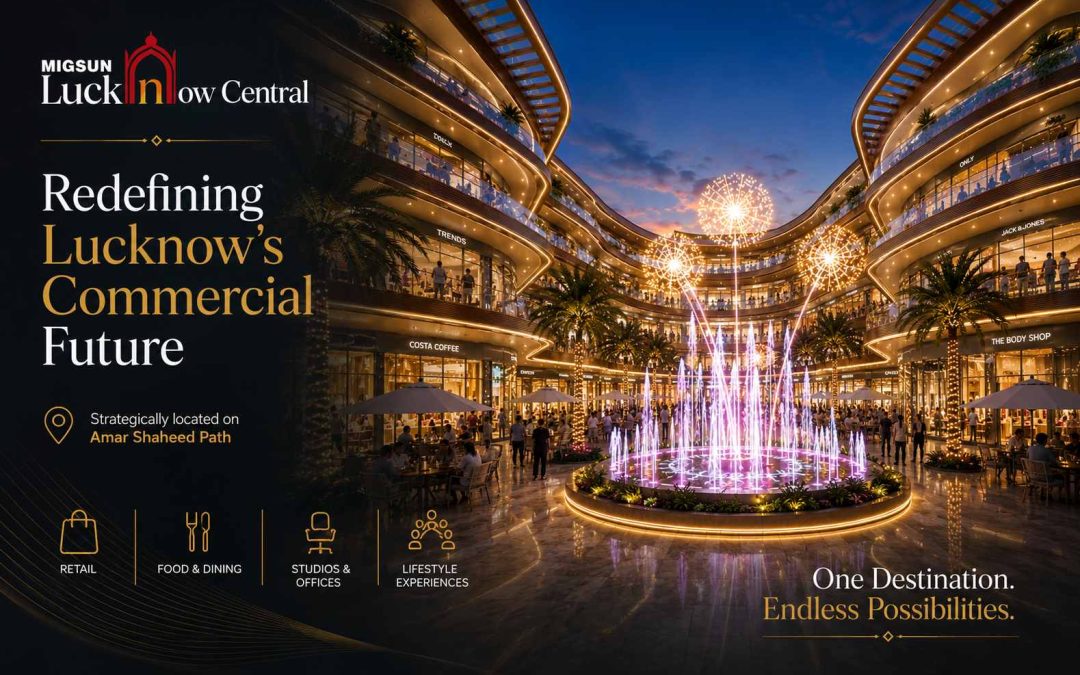
Lucknow has gradually evolved from a traditionally administrative and residential city into one of North India’s emerging urban growth centers. Over the last decade, planned infrastructure, expanding residential zones, and improved connectivity have started reshaping the city’s commercial ecosystem. This transformation is also changing how commercial real estate is being viewed by developers, investors, and consumers.
Earlier, most commercial activity in Lucknow revolved around traditional marketplaces and established business districts. Today, however, the city’s growth is moving toward planned urban corridors where residential development, lifestyle activity, and commercial demand are expanding together. Instead of focusing only on visibility or road frontage, modern commercial projects are increasingly being evaluated on the basis of accessibility, consumer movement, sustainability, and long-term ecosystem strength.
Within this changing environment, projects like Migsun Lucknow Central are entering conversations around how mixed-use commercial developments can align with Lucknow’s evolving urban lifestyle.
Lucknow’s Commercial Market Is Entering a New Phase
The commercial real estate landscape in Lucknow is no longer limited to conventional retail formats. Consumer expectations have changed significantly over the last few years, especially in rapidly growing urban regions.
Modern buyers and visitors now prefer commercial environments that combine convenience, dining, social interaction, and business functionality within one ecosystem. This shift reflects a larger trend visible across expanding Indian cities, where commercial developments are gradually moving beyond standalone retail structures.
As urban lifestyles become more experience-driven, high-street and mixed-use projects are becoming increasingly relevant. People today often choose commercial destinations based not only on shopping needs but also on the overall environment and accessibility they provide.
This evolving consumer behavior is influencing how developers conceptualize modern commercial spaces.
The Growing Relevance of Amar Shaheed Path
One of the major factors contributing to Lucknow’s commercial transformation is the rapid growth happening around Amar Shaheed Path. Over the years, the corridor has emerged as an important urban connector supported by residential expansion, institutional growth, healthcare infrastructure, and improving transportation networks.
Areas connected to active residential ecosystems generally create stronger long-term commercial potential because they benefit from recurring consumer movement. As more families, professionals, and students engage with surrounding infrastructure, the local commercial environment also grows naturally.
This is one reason why projects like Migsun Lucknow Central Sushant Golf City are gaining attention within broader discussions around Lucknow’s future commercial development.
Unlike isolated investment zones, urban corridors connected to residential and lifestyle ecosystems often support more sustainable commercial activity over time.
Why Lifestyle Integration Is Becoming Important
Commercial real estate today is no longer only about shops and office spaces. Urban consumers increasingly prefer environments where multiple activities can coexist within a single destination.
This includes shopping, dining, leisure, convenience services, and flexible business activity.
As a result, developers are moving toward integrated commercial ecosystems that support everyday urban lifestyles instead of creating purely transactional spaces.
This transformation is especially visible in mixed-use developments where retail areas are combined with food zones, business suites, social spaces, and lifestyle-oriented infrastructure.
Within this broader shift, concepts like Migsun Luxe Suites In Lucknow represent the growing interest in compact commercial formats designed around modern urban behavior.
Consumers today value convenience and accessibility more than ever. Commercial spaces that naturally integrate into daily routines often have stronger long-term relevance because they become part of recurring lifestyle movement rather than occasional destination visits.
The Rise of Commercial Studio Spaces
Another noticeable trend in modern commercial real estate is the increasing demand for studio-style commercial spaces.
Traditional office environments are no longer the only preferred option for professionals and businesses. Hybrid work culture, digital operations, consultancy-based work models, and flexible business structures have changed how people approach commercial spaces.
This shift has increased interest in compact and strategically positioned commercial studio formats.
Projects connected to active urban ecosystems often attract attention because modern professionals prefer spaces surrounded by accessibility, dining options, and lifestyle infrastructure. Flexible commercial environments may appeal to startups, consultants, small business operators, and investor-focused leasing models.
The growing visibility of discussions around Migsun Business Suites In Lucknow and Migsun Luxe Studio for sale reflects this broader market transition.
Commercial studio spaces are increasingly being viewed as adaptable environments that fit evolving urban work patterns while remaining connected to organized lifestyle ecosystems.
Food and Dining Are Becoming Key Commercial Drivers
One of the biggest changes happening in urban commercial planning is the growing importance of food and dining ecosystems.
Earlier, food courts were often treated as secondary amenities inside commercial developments. Today, they are becoming major attraction points that influence footfall and visitor engagement.
Modern consumers frequently choose commercial destinations based on dining culture, leisure experience, convenience, and overall environment rather than retail activity alone.
This shift has significantly increased the relevance of integrated food-oriented spaces within mixed-use commercial projects.
Concepts like Migsun Food Lane reflect the larger movement toward experience-driven commercial planning where food, social interaction, and lifestyle engagement contribute directly to ecosystem activity.
Organized dining spaces often encourage repeat visits and longer visitor retention, both of which are important for sustainable commercial movement. In developing urban corridors like Amar Shaheed Path, food and beverage ecosystems may gradually become stronger contributors to overall commercial activity.
Why Catchment Strength Matters More Than Visibility
One of the most common misconceptions in commercial real estate is that visibility alone guarantees success.
While accessibility and road presence remain important, long-term commercial sustainability generally depends on the strength of the surrounding ecosystem.
Modern commercial analysis increasingly focuses on residential occupancy, population movement, institutional activity, accessibility, and lifestyle demand. Projects positioned within active urban catchments usually have stronger opportunities to generate recurring footfall compared to developments dependent entirely on destination-based traffic.
This is especially relevant in planned urban regions where residential sectors continue maturing over time.
As surrounding neighborhoods become more active, commercial demand also tends to diversify naturally. This creates stronger support for retail activity, dining ecosystems, flexible business formats, and community-oriented commercial spaces.
The long-term performance of a commercial project is often shaped by how effectively it becomes part of people’s daily routines and urban movement patterns.
Lucknow’s Long-Term Commercial Outlook
Lucknow’s urban expansion story is still developing, and its commercial landscape is evolving alongside it.
The city continues witnessing growth across residential infrastructure, healthcare institutions, educational sectors, and transportation connectivity. Planned corridors like Amar Shaheed Path are becoming increasingly important because they connect movement, lifestyle activity, and urban growth within a single ecosystem.
As these regions continue maturing, demand for organized and experience-oriented commercial environments may also increase steadily.
This creates opportunities for integrated retail activity, flexible business spaces, dining ecosystems, and lifestyle-oriented commercial development.
At the same time, commercial real estate typically evolves over longer timelines. Sustainable performance depends not only on project development but also on occupancy growth, consumer engagement, tenant mix, and overall ecosystem maturity.
Conclusion
Lucknow’s commercial landscape is gradually shifting toward a more integrated and lifestyle-oriented model.
Consumers today expect commercial environments to provide more than traditional retail functionality. Accessibility, convenience, social interaction, dining culture, and flexible commercial infrastructure are increasingly influencing urban commercial demand.
Within this changing environment, projects like Migsun Lucknow Central are becoming part of broader conversations around mixed-use commercial development and evolving urban lifestyles.
Whether discussing Migsun Lucknow Central Sushant Golf City, the growing relevance of Migsun Luxe Suites In Lucknow, or experience-driven concepts like Migsun Food Lane, the larger trend reflects how commercial spaces are adapting to changing consumer behavior.
As Lucknow continues expanding, the long-term relevance of commercial developments may depend less on visibility alone and more on how effectively they integrate with the city’s growing lifestyle economy.