
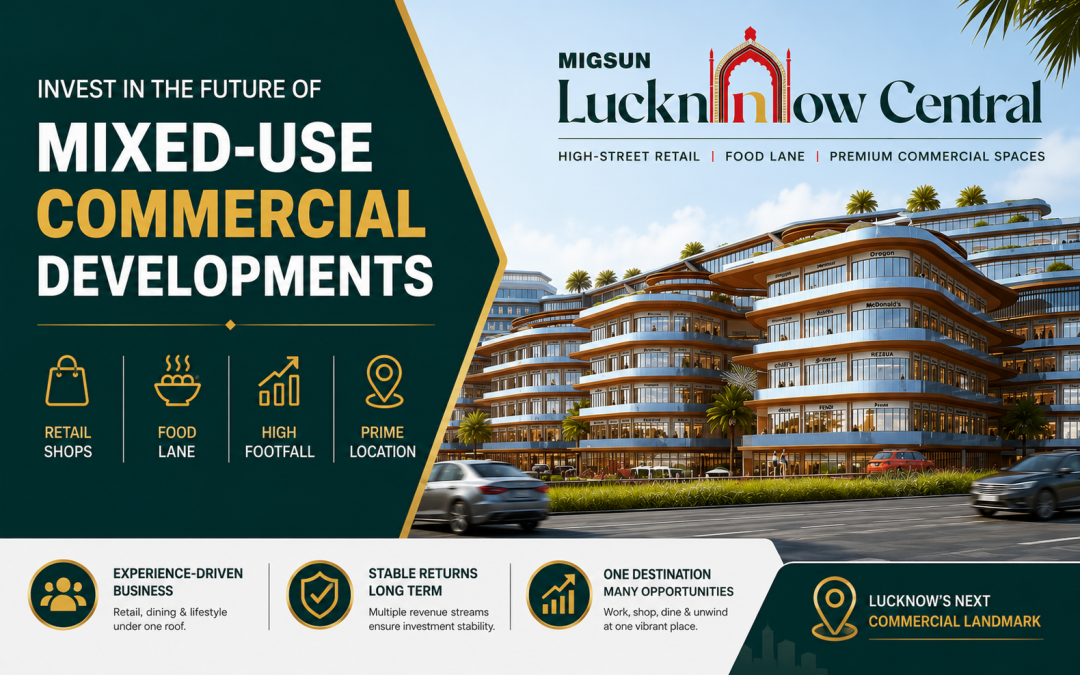
The commercial real estate market in India is changing rapidly. Investors who once focused only on standalone retail shops or office spaces are now shifting toward mixed-use commercial developments. The reason is simple — modern commercial projects need continuous activity, stronger footfall, and multiple revenue drivers to remain successful in the long term.
Today’s consumers no longer visit commercial spaces only for shopping. They also look for dining, entertainment, workspaces, and lifestyle experiences within the same environment. Because of this shift, developers are now creating projects that combine multiple commercial segments instead of depending on a single business category.
This changing trend is one of the reasons projects like Migsun Lucknow Central are attracting attention among investors looking for long-term commercial opportunities.
The Rise of Experience-Driven Commercial Spaces
Traditional commercial buildings often struggled because they remained active only during limited hours. Office zones became empty after work hours, while many older malls lost footfall due to changing shopping behavior.
Mixed-use developments solve this problem by creating a balanced ecosystem where different activities keep the project active throughout the day. A person visiting for dining may also explore retail stores, while office users generate daytime movement that supports nearby businesses.
This combination creates better commercial sustainability and improves leasing demand over time.
Modern investors now understand that footfall matters more than project size alone.
Why Retail Shops Still Matter
Retail remains one of the strongest components of any successful commercial development. However, the retail format itself has evolved.
Consumers today prefer open and accessible commercial environments rather than isolated shopping complexes. This is why high-street retail concepts are becoming increasingly popular in urban markets.
The Migsun Lucknow Central retail shops segment reflects this growing preference for modern high-street commercial spaces. Retail outlets connected to lifestyle zones and food areas generally perform better because customers naturally spend more time within the project.
For investors, this improves the possibility of stable rental demand in the long run.
Food Zones Have Become Major Footfall Drivers
One of the biggest changes in commercial real estate is the growing influence of food and dining spaces. Restaurants, cafes, and food streets are no longer just additional features — they are often the main attractions that bring regular visitors into a project.
This is where concepts like Migsun Lucknow Central Food Lane become important.
Food-focused commercial zones help create:
- evening activity,
- weekend footfall,
- and repeat customer visits.
A strong food lane also supports surrounding retail businesses because customers visiting for dining often explore nearby stores and services as well.
For commercial projects, this combination creates a more active business environment compared to traditional single-purpose developments.
Investors Are Now Thinking Long Term
Another reason behind the rise of mixed-use commercial projects is the changing mindset of investors.
Earlier, many buyers focused mainly on short-term appreciation. Today, investors are becoming more practical and evaluating projects based on:
- rental sustainability,
- occupancy potential,
- tenant mix,
- and long-term commercial viability.
Mixed-use developments usually offer better stability because they depend on multiple business segments instead of a single source of activity.
Even if one category slows temporarily, other segments can continue generating movement and leasing demand. This diversification reduces investment risk and improves long-term growth potential.
Why Tier-2 Cities Are Becoming Commercial Hotspots
The growth of mixed-use developments is no longer limited to metro cities. Tier-2 cities like Lucknow are also witnessing rapid commercial expansion.
Improved infrastructure, metro connectivity, residential growth, and rising consumer spending are increasing demand for organized retail and lifestyle-oriented commercial spaces.
As these cities continue expanding, commercial projects located near strong residential catchments may benefit from sustained local demand. This is one of the reasons developments like Migsun Lucknow Central are being closely watched by investors interested in emerging urban markets.
Execution Will Decide Long-Term Success
Although mixed-use commercial developments offer strong potential, long-term performance always depends on execution quality.
Factors such as:
- commercial planning,
- parking management,
- accessibility,
- maintenance,
- and tenant selection
play a major role in determining whether a project can maintain healthy footfall after possession.
Strong concepts alone are not enough. Successful commercial projects are built around practical functionality and long-term operational management.
Final Thoughts
The shift toward mixed-use commercial developments reflects a major transformation in Indian real estate. Investors are now looking beyond traditional retail or office spaces and focusing on projects that can create continuous commercial activity.
Developments that combine retail, dining, social interaction, and lifestyle experiences are becoming more attractive because they align with modern consumer behavior and evolving urban demand.
Projects like Migsun Lucknow Central represent this broader industry shift, where the future of commercial real estate is increasingly centered around integrated and experience-driven business environments rather than isolated commercial structures.